
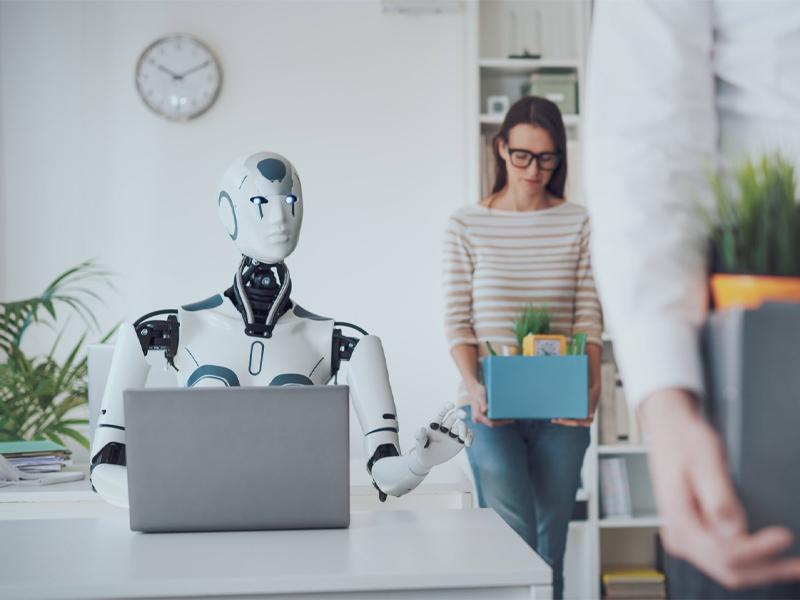
How AI Will Impact Jobs and Careers in 2025—And How to Stay Ahead
Artificial intelligence (AI) is no longer a distant concept that is discussed only in boardrooms or tech conferences. It’s actively shaping the modern workplace, changing how companies operate, how tasks are completed, and what skills are in demand. As we step deeper into 2025, AI’s influence on jobs and careers is becoming more visible—and understanding this shift is important for anyone who wants to stay relevant in the evolving job market.
Whether you’re a student planning your career path, a professional looking to grow, or someone curious about the future of work, here’s a clear, practical look at how AI is transforming jobs and how you can stay ahead.
1. AI Is Redefining Everyday Work
One of the biggest changes happening across industries is the automation of routine tasks. AI systems are excellent at analyzing data, recognizing patterns, and handling repetitive processes with speed and accuracy.
This doesn’t just apply to manufacturing or logistics—it’s also happening in fields like marketing, customer service, finance, education, and healthcare. For example, AI can:
- Generate reports and summarize information in seconds.
- Schedule meetings and manage workflows automatically.
- Handle simple customer queries through chatbots and virtual assistants.
- Analyze trends to support decision-making.
As these routine tasks become more automated, employees can focus on areas that require human judgment, creativity, empathy, and critical thinking.
2. New Job Roles Are Emerging
While AI is transforming existing roles, it’s also creating entirely new opportunities. Companies need people who can design, manage, and work alongside AI systems. Some of these roles didn’t exist a few years ago, and more will appear in the coming decade. Examples of emerging roles include:
- Prompt engineers who craft effective inputs to get useful outputs from AI systems.
- AI trainers, who help systems learn by providing structured feedback.
- Ethics specialists ensure responsible AI use.
- Data analysts and strategists who bridge human decision-making with machine intelligence.
- Automation coordinators oversee how AI integrates into business operations.
These positions highlight that AI isn’t replacing humans entirely—it’s reshaping how we work and opening new career paths.
3. Traditional Roles Are Evolving, Not Disappearing
There’s a common fear that AI will replace entire professions overnight. In reality, most jobs are being reshaped rather than eliminated. Roles in accounting, teaching, healthcare, law, and marketing are good examples.
Instead of removing these jobs, AI is changing their core responsibilities. A teacher might use AI to personalize lesson plans. A marketer might use AI tools to analyze campaign performance faster. A doctor might rely on AI for diagnostic support while focusing more on patient care.
The key shift is that professionals will spend less time on administrative work and more time on strategic, creative, and interpersonal tasks that AI cannot replicate.
4. Essential Skills Are Shifting
As AI becomes part of everyday work, the skills that employers value most are changing. Technical skills remain important, but soft skills and adaptability are equally critical. Key skills for thriving in an AI-driven workplace include:
- Critical thinking and problem-solving – interpreting AI insights effectively.
- Adaptability and continuous learning – staying flexible as tools evolve.
- Collaboration and communication – working effectively in human-AI teams.
- Digital literacy – understanding how to use AI tools confidently.
- Ethical awareness – ensuring responsible use of emerging technologies.
Workers who combine these human skills with basic AI literacy will have a clear advantage in the job market.
5. Lifelong Learning Will Become Non-Negotiable
The rapid pace of AI advancement means careers will involve continuous upskilling. A degree or qualification earned years ago will no longer guarantee long-term career security.
Thankfully, learning new skills has become more accessible than ever through online platforms, short courses, webinars, and workshops. Staying ahead doesn’t require becoming an AI expert—it’s about being open to learning new tools, adapting workflows, and keeping your knowledge current.
Professionals who invest in regular skill updates will be far better positioned than those who resist change.
6. AI Will Boost Productivity—But Also Competition
AI gives individuals the ability to do more in less time, which is great for productivity but also raises the bar for performance. Companies may expect employees to deliver faster results and handle more complex tasks as AI supports them.
On the flip side, this also creates opportunities for ambitious individuals to stand out. Those who learn how to use AI tools effectively can work smarter, produce higher-quality results, and advance their careers more quickly.
7. How to Stay Ahead in an AI-Driven Job Market
Staying competitive in 2025 doesn’t require mastering every AI tool—but it does require a proactive approach. Here are a few practical ways to stay ahead:
- Embrace change early: Don’t wait until new tools are mandatory; start experimenting now.
- Develop a growth mindset: View AI as a partner that can enhance your skills, not a threat.
- Focus on uniquely human strengths: Creativity, empathy, leadership, and ethical reasoning remain invaluable.
- Invest in learning regularly: Short, consistent learning sessions are more effective than occasional large efforts.
- Network and collaborate: Engaging with communities that explore AI can keep you informed and inspired.
By treating AI as an ally and developing adaptable skills, you’ll position yourself to grow rather than get left behind.
Conclusion
AI’s impact on jobs in 2025 is significant, but it’s not purely about replacement—it’s about transformation. The workforce is shifting toward a human + AI collaboration model, where routine tasks are automated, new roles emerge, and existing jobs evolve.
The people who thrive will be those who embrace lifelong learning, adapt quickly, and leverage AI to enhance their strengths. Rather than fearing the change, understanding and preparing for it is the smartest career move you can make.

James Henley Jr.
Lorem Ipsum is simply dummy text of the printing and typesetting industry. Lorem Ipsum has been the industry’s standard dummy text ever since the 1500s, when an unknown printer took a galley of type and scrambled.
RECENT POST
Practical Ways to Use AI in Your Daily Routine—Even If You’re Not a Tech Person
October 9, 2025
No Comments
What Is AI and How Can It Help You in 2025?
October 9, 2025
No Comments